
Record Retention Guide: How Long to Keep Important Tax and Financial Records
Arlene Pizarro
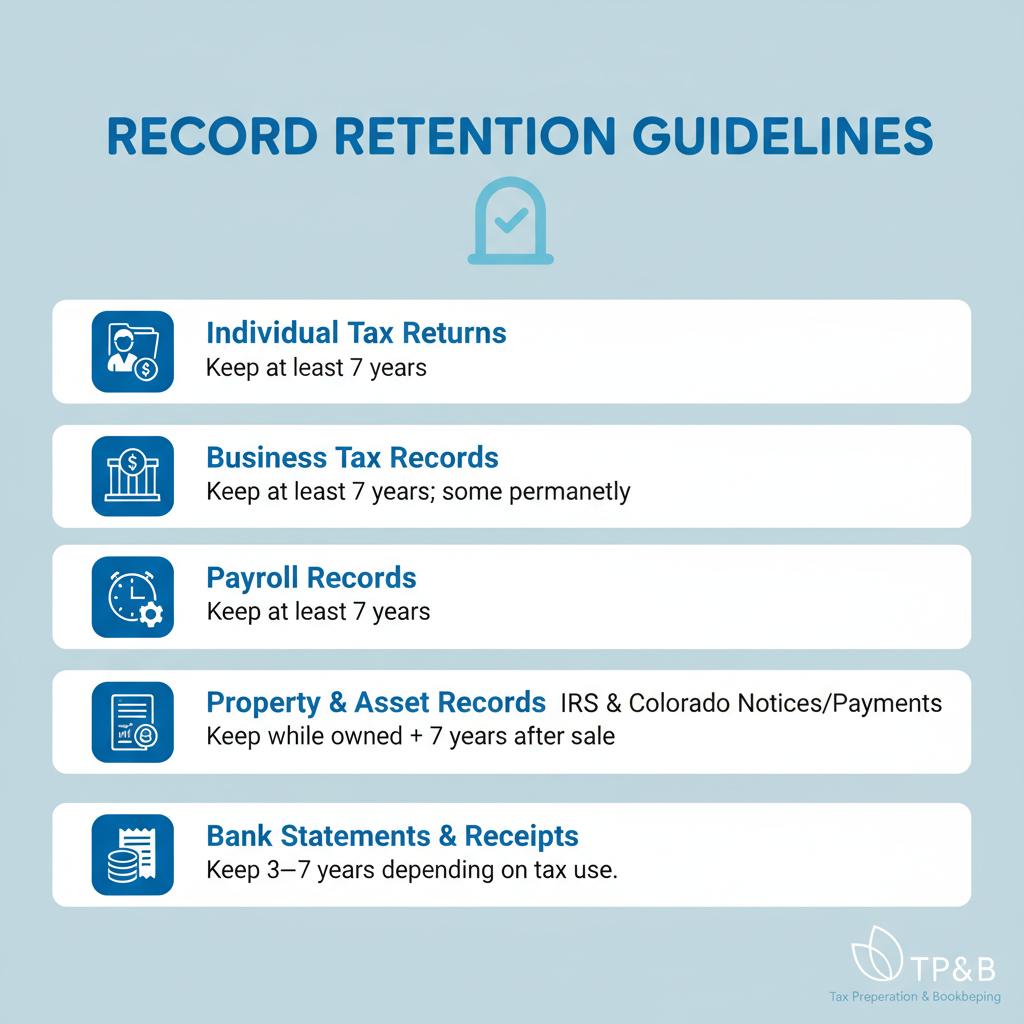
When tax season rolls around, it’s easy to wonder: “How long do I really need to keep all this paperwork?” At 5280 Tax, we know that sorting, saving, and storing documents can feel overwhelming — especially when you’re dealing with years of tax returns, receipts, and financial statements. Having a clear record retention strategy not only keeps your files tidy but also protects you in the event of an audit and ensures you have the information you need when life or business changes.
Why Record Retention Matters
Keeping the right documents for the right amount of time helps you:
- Stay compliant with IRS and state requirements
- Prepare future tax returns accurately
- Protect yourself during audits or disputes
- Maintain financial clarity for personal or business planning
General IRS Guidelines
The IRS has specific rules for how long taxpayers should hold on to documents. Here’s a helpful summary:
- 3 years: Most tax returns, receipts, and supporting documents (the IRS can audit up to three years back)
- 4 years: Colorado Department of Revenue recommends keeping state tax records for at least four years
- 6 years: Documents related to unreported income (if the IRS believes income was underreported by more than 25%)
- 7 years: Records for claims of worthless securities or bad debt deductions
- Indefinitely: Records related to fraud, unfiled tax returns, or important legal documents such as property records, business formation papers, and retirement plan documents
Personal Tax Records
For individuals, a clear retention system can save you headaches later. Keep the following:
- Tax returns: At least 3–7 years depending on your filing situation
- W-2s, 1099s, and other income records: Minimum of 3 years
- Deduction support: Charitable contributions, medical receipts, mortgage interest statements, etc. for at least 3 years
- Home ownership records: Keep as long as you own the property + 3 years after selling
- Retirement account statements: Permanent records for contributions and distributions
Business Record Retention
Businesses — especially Colorado small businesses — rely on accurate recordkeeping more than ever. Retain:
- Business tax returns: Minimum 7 years
- Payroll records: At least 4 years (IRS + Department of Labor requirements)
- Bank statements & reconciliations: 7 years
- Invoices, receipts, and general ledgers: 7 years
- Business formation documents, bylaws, ownership agreements: Permanently
Digital vs. Paper Records
The IRS accepts digital copies as long as they are clear, readable, and accessible. Scanning documents into a secure digital folder can help reduce clutter while keeping a reliable backup.
Tips for Staying Organized
- Create annual folders labeled by tax year
- Use password‑protected digital storage for sensitive documents
- Keep Colorado and IRS records together for easy reference
- Archive closed accounts instead of deleting them
When in Doubt, Don’t Throw It Out
If you’re ever unsure whether to keep or discard a financial document, err on the side of caution. Holding onto a record for an extra year is far easier than trying to recover something that’s been shredded or deleted.
Need Help Organizing or Uploading Documents?
We’re here to help. Whether you’re gathering records for tax preparation, uploading documents through Citrix, or mapping out long‑term tax planning, 5280 Tax offers practical guidance for individuals and businesses across Colorado.
Have questions about your specific situation? Reach out anytime — we’re always happy to help you stay organized, prepared, and confident.